

1. Do your research when choosing a tattoo and an artist.
- Don’t rush yourself when choosing an idea. You’re going to have to live with it forever.
- Most artists have a speciality, think about this when choosing one. If you want a photorealistic tattoo don’t choose an artist who specializes in American Traditional, for example.
- Don’t ask to have your neck/face/hands tattooed if it’s your first tattoo, you will most likely be denied.
- Look into the cost of the tattoo before walking into the shop, don’t sacrifice the tattoo you want to get a good deal. Save up to get the right ink.
- Be prepared to be placed on a large wait list for the more popular artists.
2. Prepare properly on the day you get your tattoo.
- Eat a full meal beforehand.
- Many artists recommend drinking orange juice prior to getting inked.
- Don’t drink alcohol beforehand.
- Getting tattooed is a pretty intimate experience, don’t forget to shower.
3. Bring a good reference photo.
- Bring in a high res photo if possible; at the very least a picture that is big and not blurry.
4. Don’t bring your entourage to the shop with you.
- It’s fine to bring a friend to hold your hand, any more than one is rude and obnoxious.
- Children are not permitted in most tattoo shops, leave them at home.
5. Trust your artist.
- The artist knows what they are doing, there is no need to be a “backseat driver.”
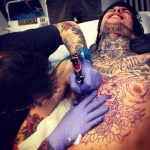
6. Check out the stencil design, body placement, and spelling before the tattoo begins.
via Inked Magazine
Inked Magazine
- If you see something, say something. You aren’t going to hurt anyone’s feelings if you tell them that something is spelled incorrectly.
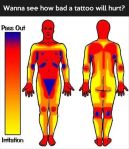
7. Be prepared to go through some pain, tattoos hurt.
- Don’t be afraid to tell your artist that you need to take a break if the pain is too much. Nobody wants a passed out client.
- Ribs, feet, hands, head, and the spine all really hurt.
8. Stay still!
- We know that it might be difficult to do so, but make every effort to remain as calm and still as possible while getting tattooed. If you are jittery the artist won’t be able to create straight lines.
9. Tip your artist.
- Most artists don’t own their shops and have to pay a percentage of the tattoo price to the shop.
- Tipping anywhere between 10-20% should be fine.
- If you really love the work don’t be afraid of tipping extra.
10. Take care of your tattoo once you leave the shop.
- Tattoo aftercare is a crucial step in assuring you have a good tattoo.
- Tattoos will scab and they should heal in 2-3 weeks.
- Avoid sun and going in bodies of water for the first 2 weeks.
- Keep the tattoo moist and clean as it heals.
- Once it’s healed don’t forget to use SPF 50 sunscreen when going outside, you don’t want your tattoo to fade.
via Inked Magazine
For future reference!
THANKKKKK YOUUUUUU
that foot tattoo was THE MOST PAINFUL BULLSHIT I HAD EVER EXPERIENCED and it was my 7th freaking tattoo.
i wish i’d seen something like this before hand to at least prepare myself.
I had ZERO pain with my foot tattoo.. but this is a great guide!!!!
Gearing up for my ankle and this makes me at ease
I’ve got some work in the blue zones, and that shit is no joke.











 konekorambles